English



Beyoğlu Now & Then: In Search of a Lost Soul
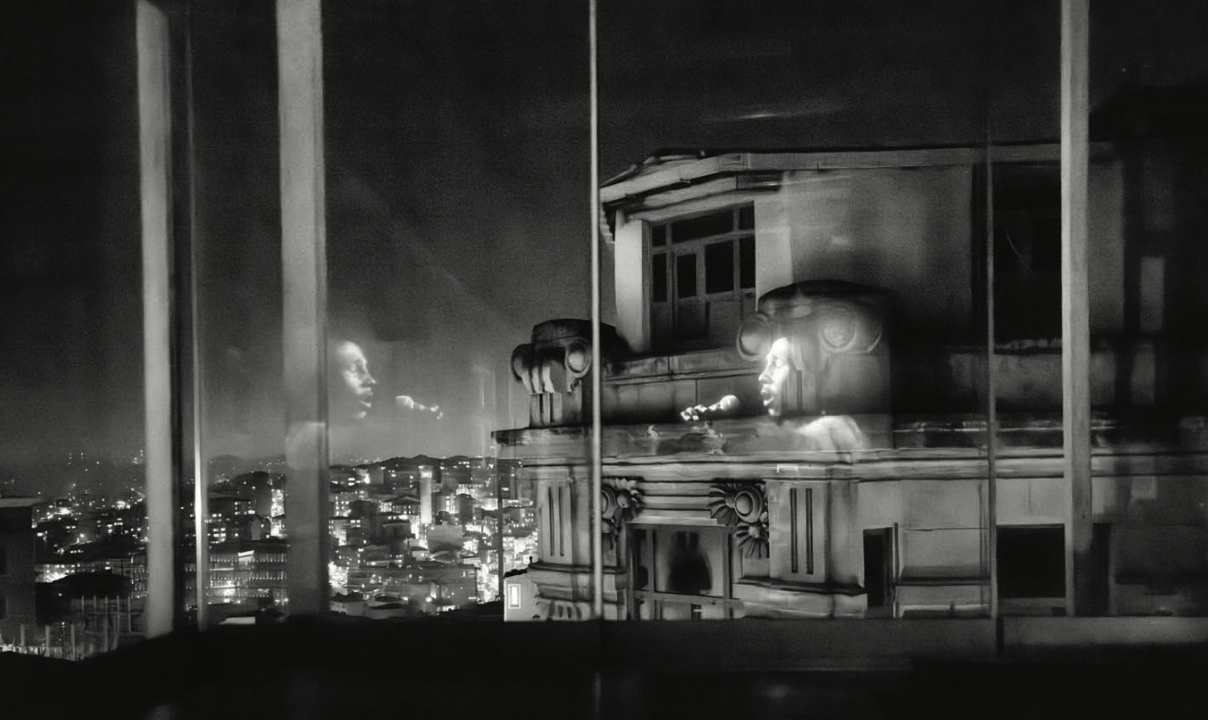
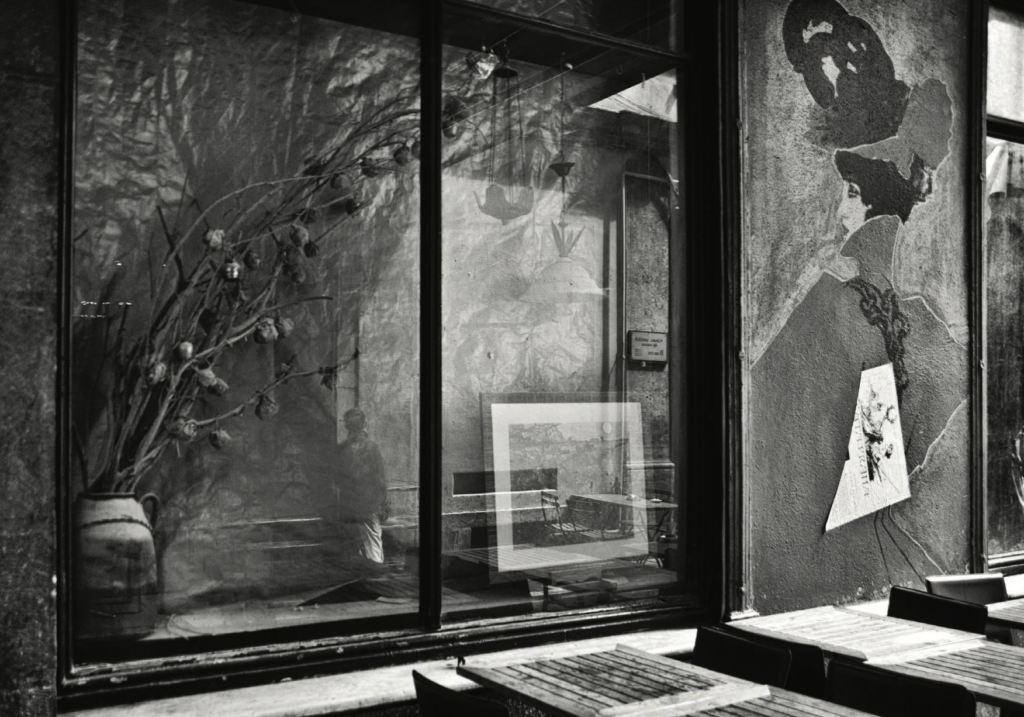
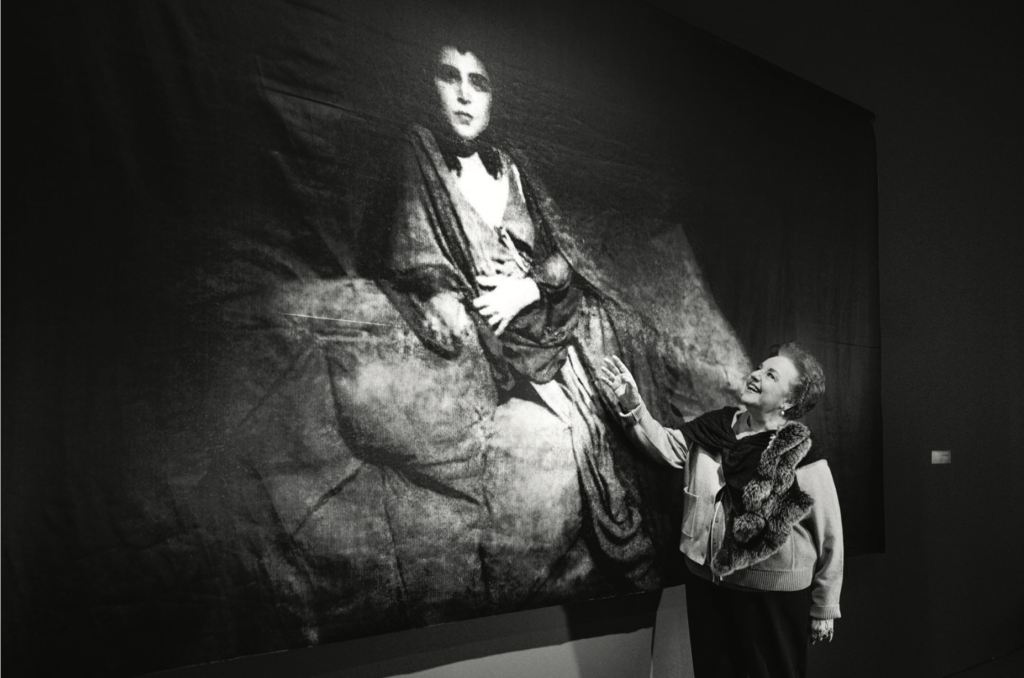
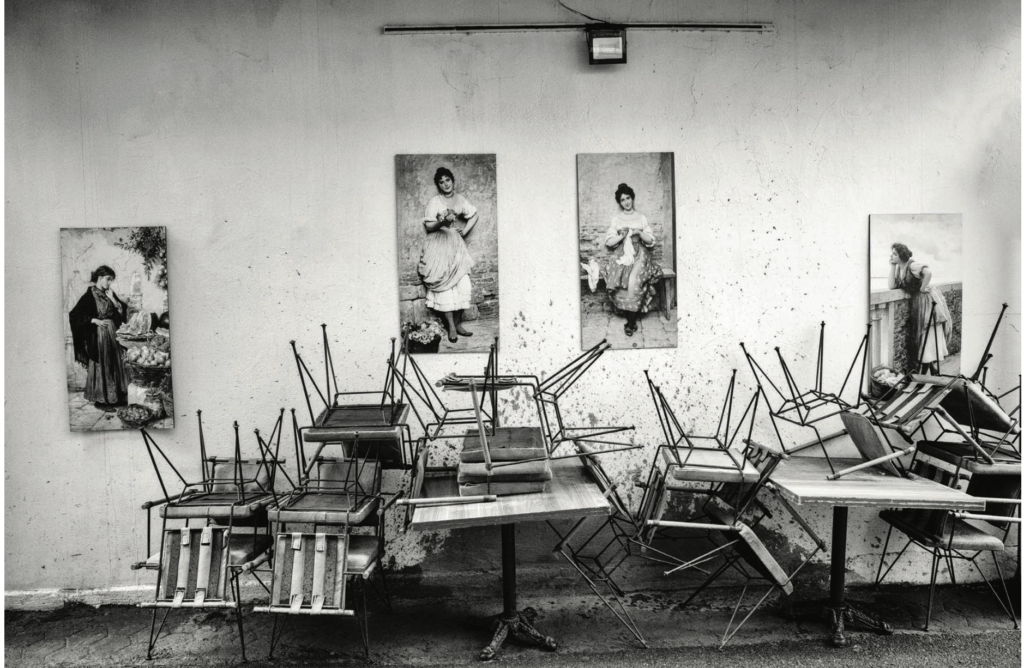
Since the 1980s, Timurtaş Onan has been chasing the spirit of Istanbul. He has spent decades photographing the city’s many faces, from the historic hans of the Old City to Dolapdere’s musician cafés, the artists who put down roots in Beyoğlu, its regulars and its nightlife. Now, with “Beyoğlu Then & Now”, he pays visual tribute to the neighbourhood he has frequented, lived in and enjoyed since his youth. Following the traces of places that have disappeared, characters who are no longer with us and a bohemian way of life whose echoes have grown quieter, he goes in search of Beyoğlu’s elusive soul —one that has changed, but never quite been captured.
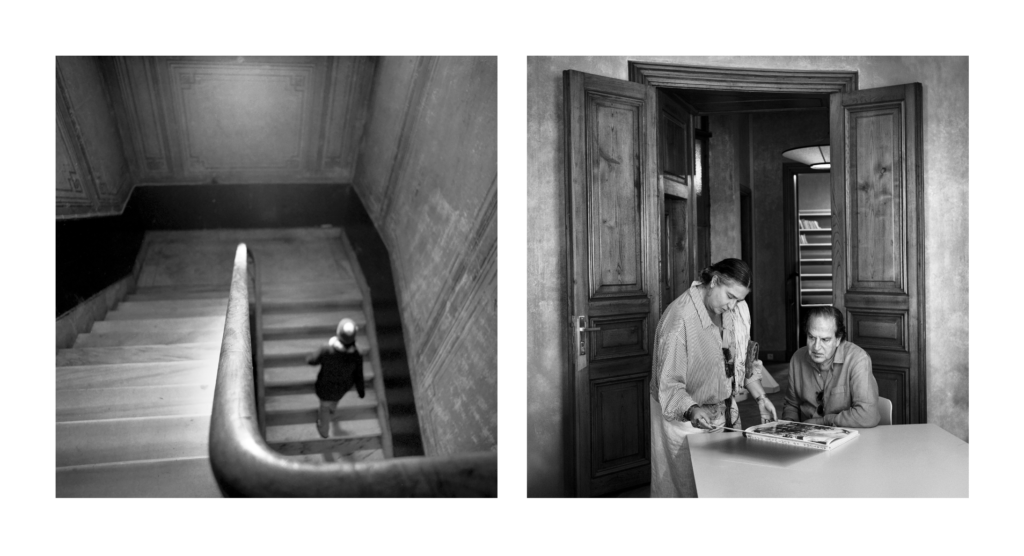
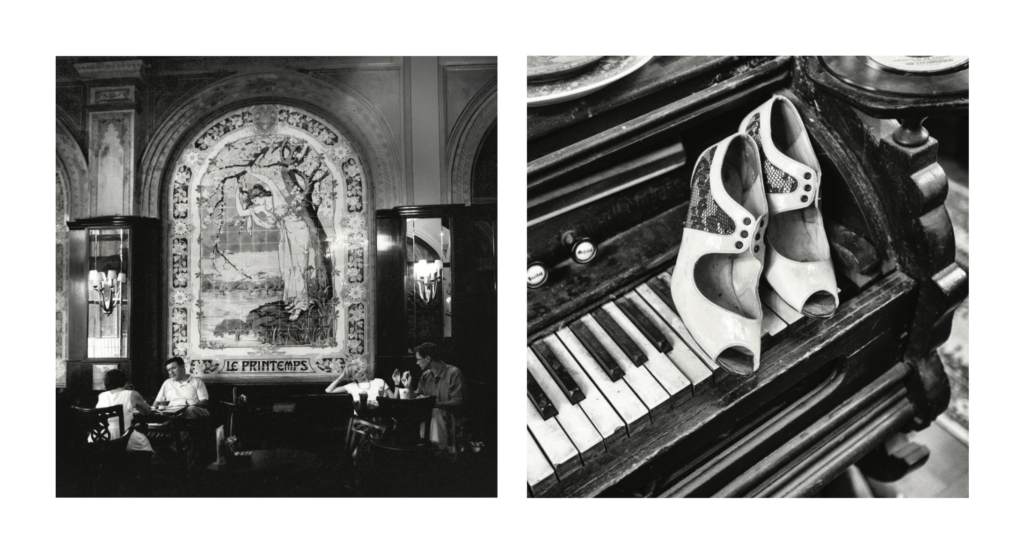
How did your relationship with Beyoğlu begin and evolve?
I’m actually a Bağdat Avenue kid. But when I was young, I started going to Beyoğlu because I was DJing…
When was that? They say you shouldn’t ask a man his age though… 🙂
In the 1970s. There was Studio 54 in New York; in Istanbul, we had Hydromel in Elmadağ. I was the DJ there. After our shifts, we’d go to other discotheques. There was Club 12, where Huysuz Virjin used to perform. People would head there around three, four, five in the morning. It would be packed, all sorts of people. It might sound fantastical to a younger generation now, but the nightlife was something else.
There was a disco called Babadilla, which attracted mostly black people. Modül in Taksim was more “mainstream”. There was Regine; a friend of ours from Kadıköy Maarif College, Alp, used to DJ there. They played more “elite” music —French slow songs and so on. At Hydromel, though, we mostly played soul, rock and jazz. People who were into that kind of music would come to us.
Finding records was really difficult back then. Someone who worked as a musician in Las Vegas used to bring new records to the discos every month. Billboard charts from America would also arrive at certain record stores. We’d find records through them and buy them. Sometimes I’d spend days looking for a particular album.
There was a place called Chicago, and Nino Varon had a shop called Nova Müzik Center. A man named Jirayr ran Audio Center; he really knew music. If I remember correctly, it was in Yılmazlar Passage in Şişli. Say The Crusaders had just released something new —we’d go around searching everywhere just to find it and play it.
Our whole life revolved around Beyoğlu and Taksim. I lived in Caddebostan. At the end of the night, we’d cross over in an eight-person dolmuş to get home. There would be women working in nightclubs, musicians, various characters who lived on the other side. There was a köfte seller who had just got out of prison; while waiting for the dolmuş, we’d listen to his stories.
The dolmuş drivers were great too. Sometimes I’d fall asleep. Then I’d suddenly realise the dolmuş had turned into my street. Door-to-door service…
I was also obsessed with cinema. We used to go to the Film Archive in Harbiye from middle school onwards. There was also the Cinematheque on the site of the former Maksim Gazino (now the Sofitel Hotel). Back then, before simultaneous interpretation was available, we would watch arthouse films with printed transcripts of the dialogues in hand.
In the 1980s, Beyoğlu was filled with nightclubs and brothels. It remained a strange place for quite a while. I went to Antalya in 1990 and set up an agency there, but I never really managed to let go of Beyoğlu. I kept coming back. When I started missing Istanbul too much, I returned in 2000.
I rented a large studio and home office in Talimhane. Years later, my wife Sennur and I moved to Cihangir and opened an office in Tokatlıyan Han. I became deeply involved with Beyoğlu again. They were wonderful years… I was taking photographs constantly, in the Old City and in Beyoğlu. I worked on several series around that time, including one documenting the Roma neighbourhoods of Dolapdere.
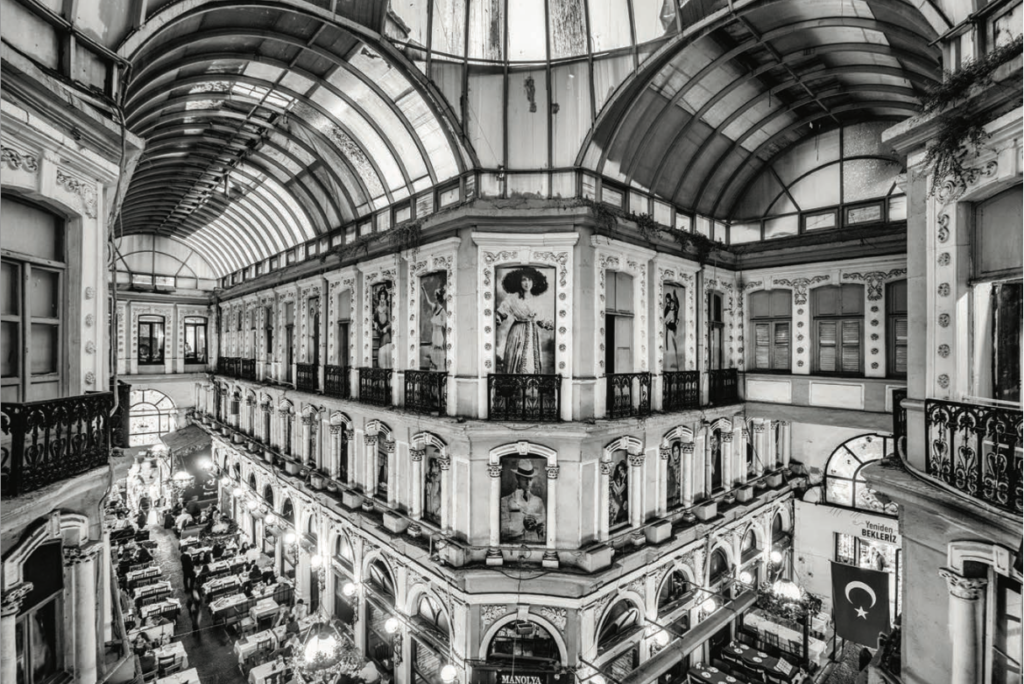
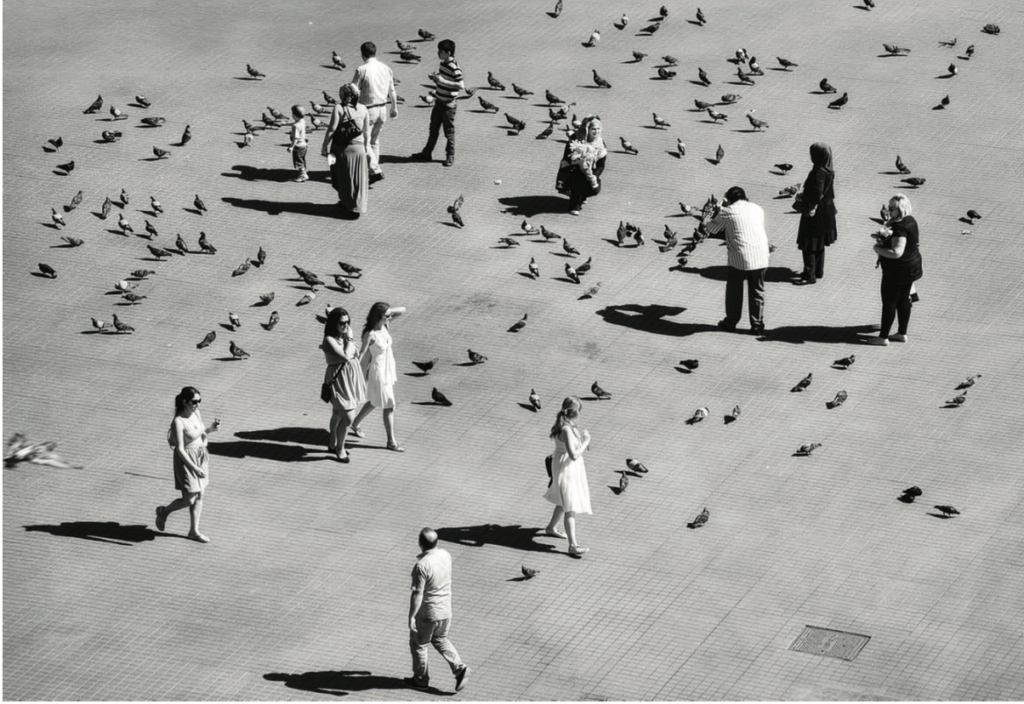
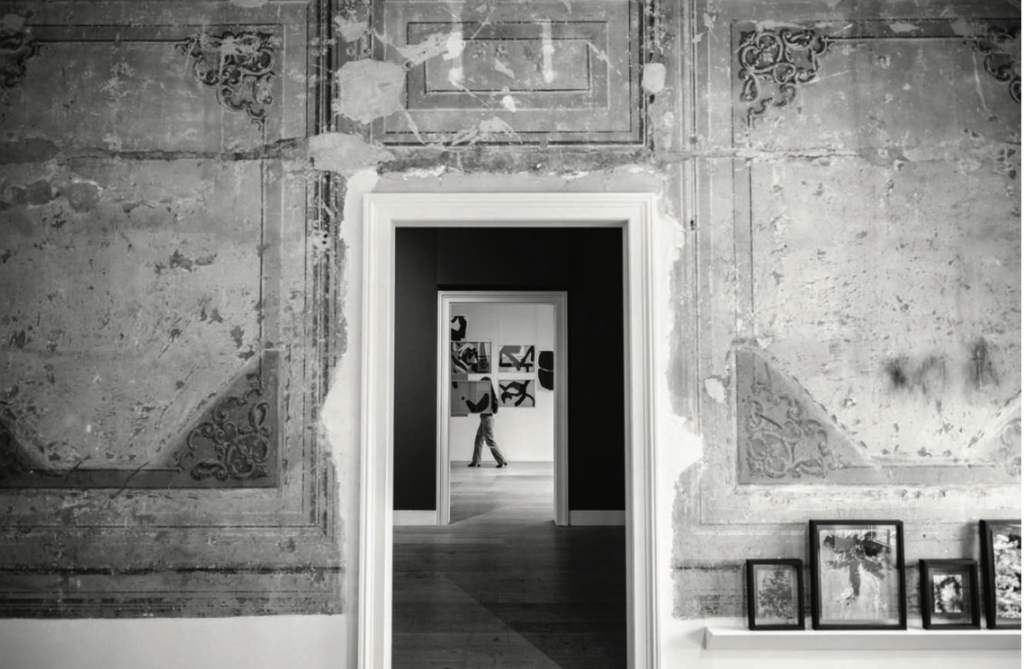
Some people have described Beyoğlu as a poor imitation of Paris. Having travelled extensively in Paris and photographed the city yourself, do you think that’s fair?
There was, of course, a fascination with the Western culture during the late Ottoman period —there were people calling each other “Monsieur” on Beyoğlu streets and so on. But I have never seen another street quite like İstiklal Avenue, where such beautiful examples of architecture, from Art Nouveau to Neoclassical, come together.
Paris itself has undergone urban transformation. The Paris we know from Robert Doisneau’s black-and-white photographs, or from Albert Lamourisse’s Oscar-winning 1956 short film Le Ballon Rouge (The Red Balloon), no longer exists. There are beautiful palaces, of course, but the streets and buildings are much more uniform. They have taken very good care of their historic places though. Here, many sites of cultural memory have been ruined by misguided restorations.
Beyoğlu is perhaps the neighbourhood where people most openly mourn what has disappeared. Are you one of those people?
I don’t like the way it looks now because it reminds me of a huge shopping mall. I loved the bohemian life that emerged in the 1990s: bookshops, galleries, cafés and places opened by people with a certain cultural sensibility. Now there are mostly commercial chains along the main avenue.
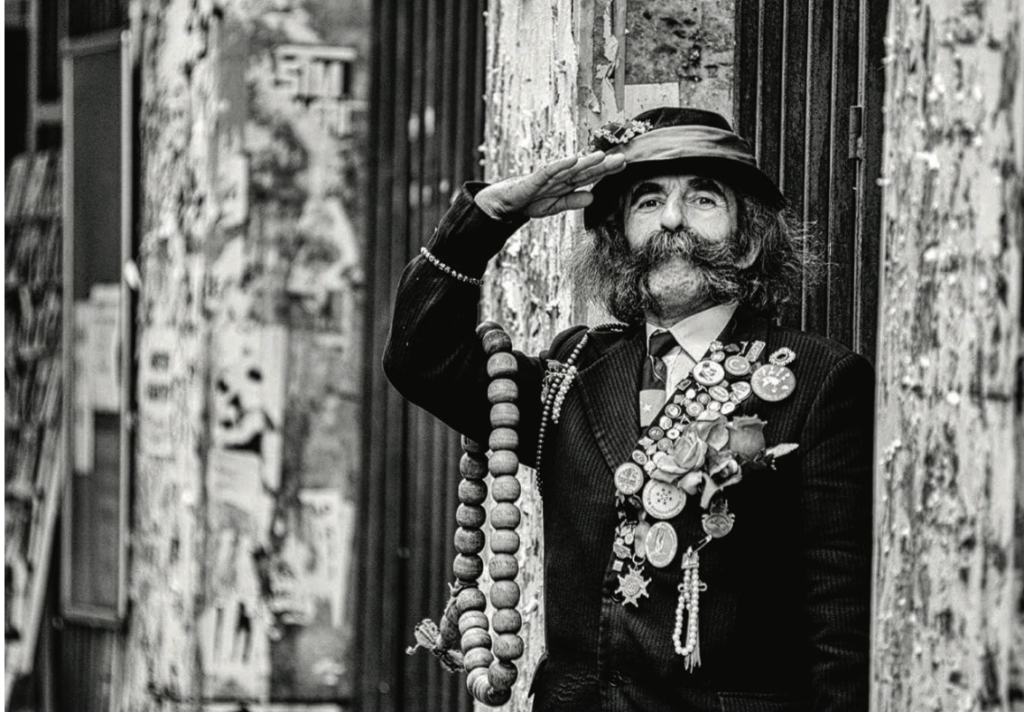
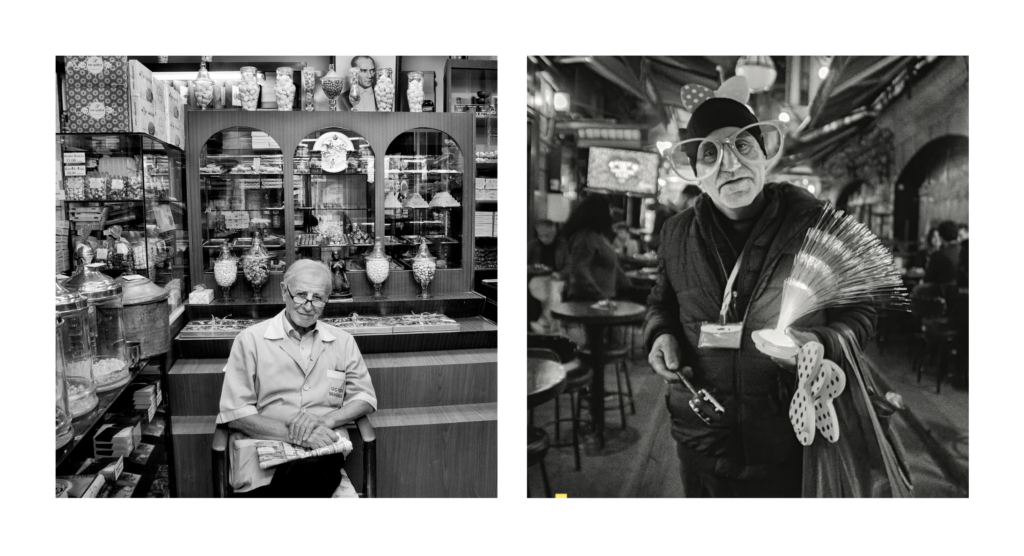
You can still find different kinds of places in the side streets, particularly around Asmalı Mescit. The old café where supporting actors of Turkish film industry has attended since 70s is is still there, for instance, on the Yeşilçam Street. Some of the shopkeepers who gave Beyoğlu its character have survived too, mostly tucked away inside passages or down side streets. Some of these people appear in portraits in my book, “Beyoğlu Then & Now”.
Tell us more about the book.
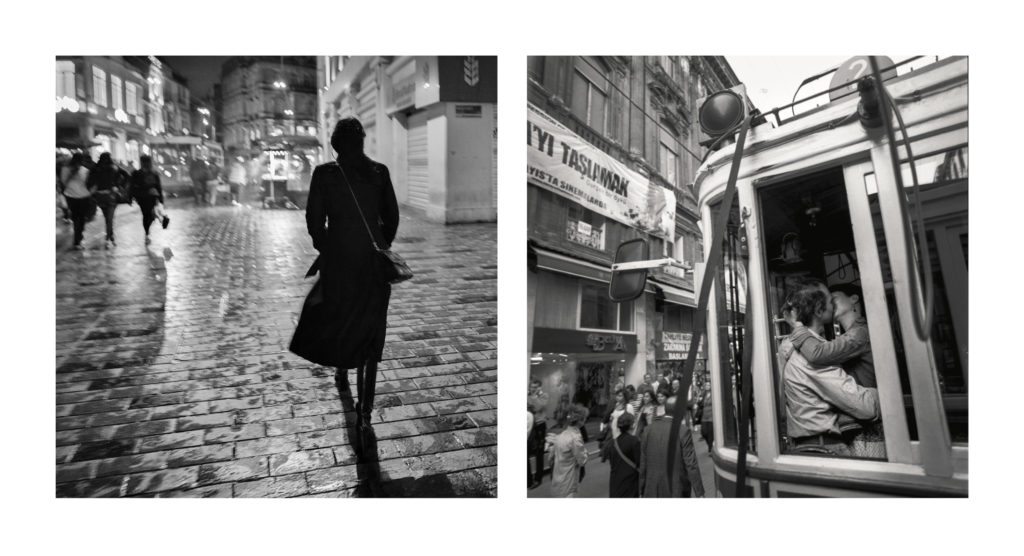
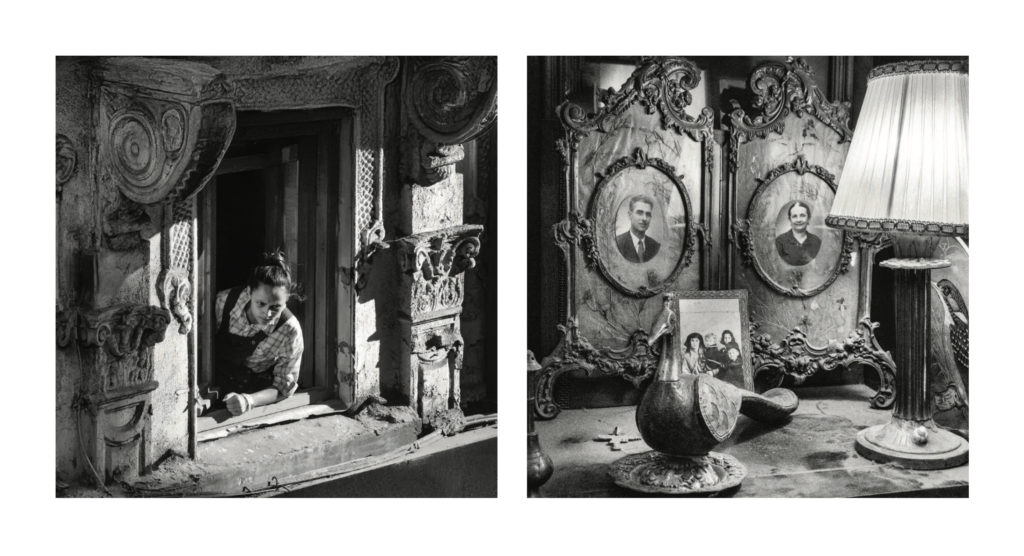
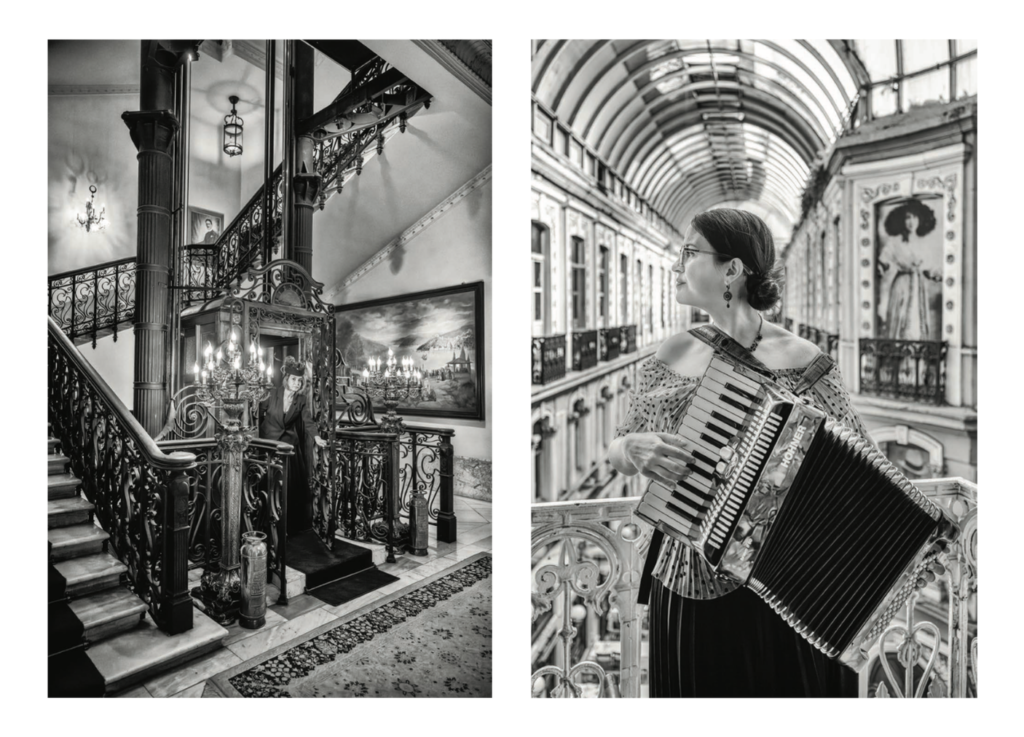
After returning to Istanbul in 2000, I began an analogue, medium-format project on Beyoğlu. I made appointments to photograph portraits of important Beyoğlu characters and artists, while also working in the streets.
Then, because of various circumstances, I put the project aside towards the end of the 2000s. Over the last two or three years, I completed it by adding new work and finally published it as a book.
Fitting a place as culturally layered as Beyoğlu into a single volume must have been quite a responsibility. How did you approach it? What will readers find in the book?
Some of the places I photographed no longer exist. I photographed Kelebek Korse, for example; it’s gone now. İnci Pastanesi has moved to a side street. As far as I know, the hat shop belonging to Madam Katya in Hazzopulo Passage is one of the few old businesses still there… Everywhere has become either a clothing store or a restaurant chain.
Around Asmalı Mescit, I photographed painters such as Orhan Taylan, who had a studio there; sculptor Namık Denizhan, who lived and worked in the Syrian Passage; and painter and poet Habib Gerez, who lived in Galata. They are no longer with us either.
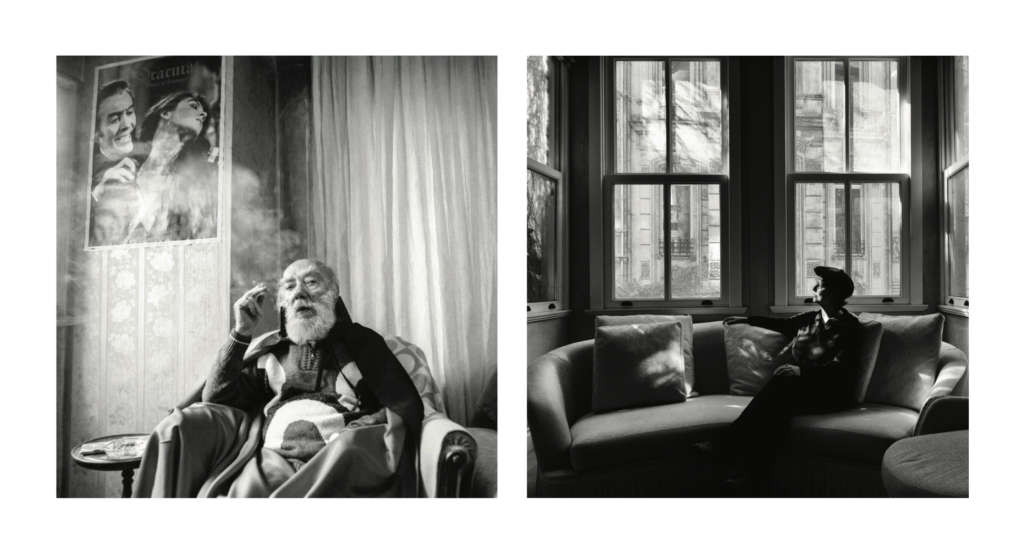
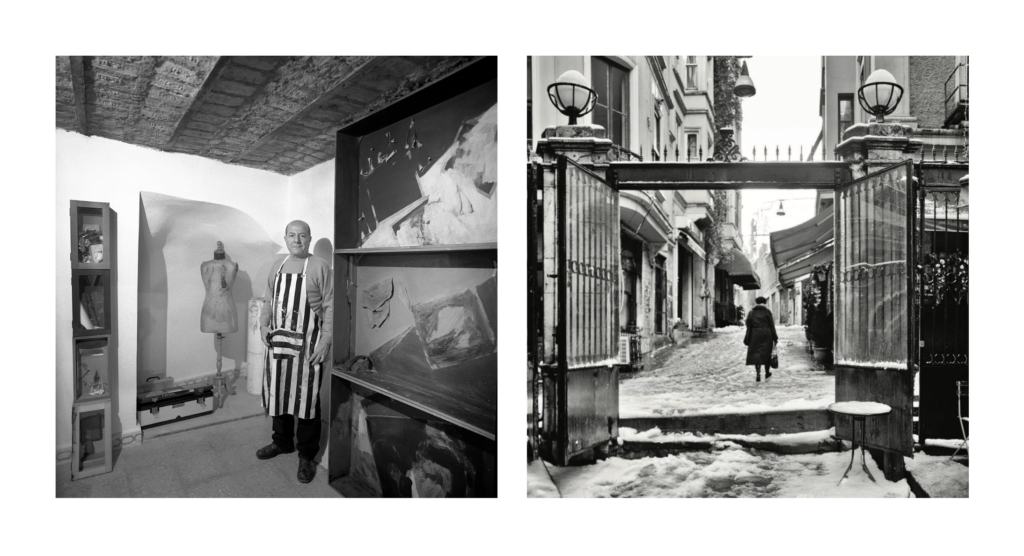
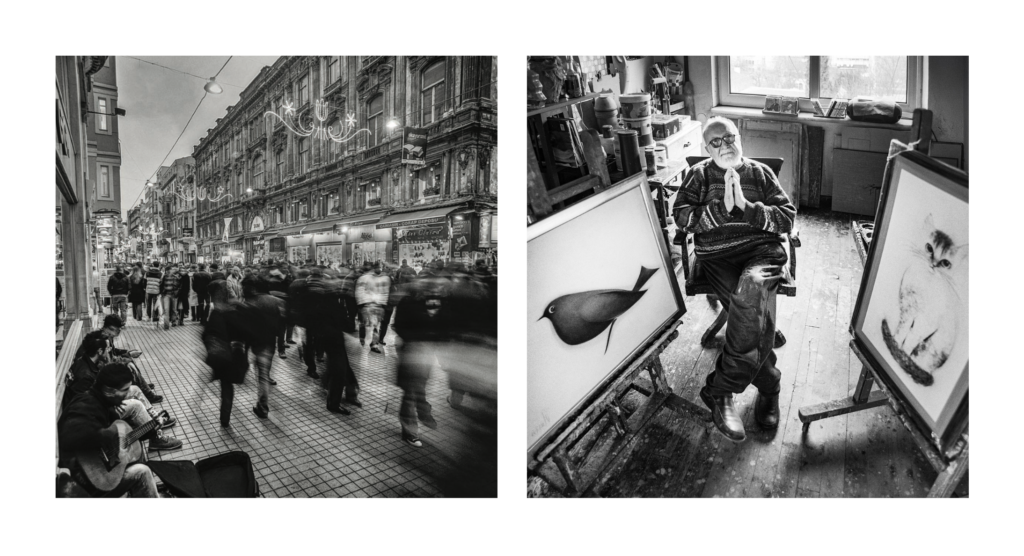
Beyoğlu has always had a darker, more unsettling side. Does the book explore that too?
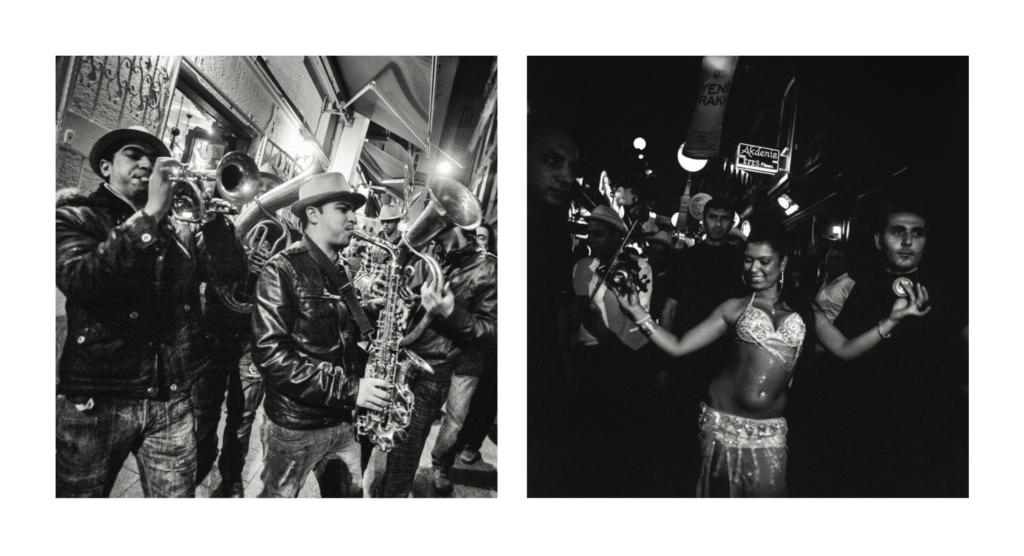
That darker side is a separate story. I previously worked on it as a series called “Beyoğlu Nights”, focusing more on unconventional, marginal lives… The dark side of the moon, if you like.
In 2005, I exhibited the series as an installation at the French Cultural Centre. I stuck the photographs onto cardboard using packing tape and created an underground presentation inside a room, accompanied by sounds I had recorded in Beyoğlu. The exhibition later travelled to Germany and Greece. It’s still something people talk about. I like experimenting with different concepts. I don’t want to be the same photographer all the time.
Which are your favourite photographs in the book? The ones that best capture the spirit of the neighbourhood?
The photograph of the couple kissing on the tram is quite famous. It went to a number of collectors and the editions are almost sold out.
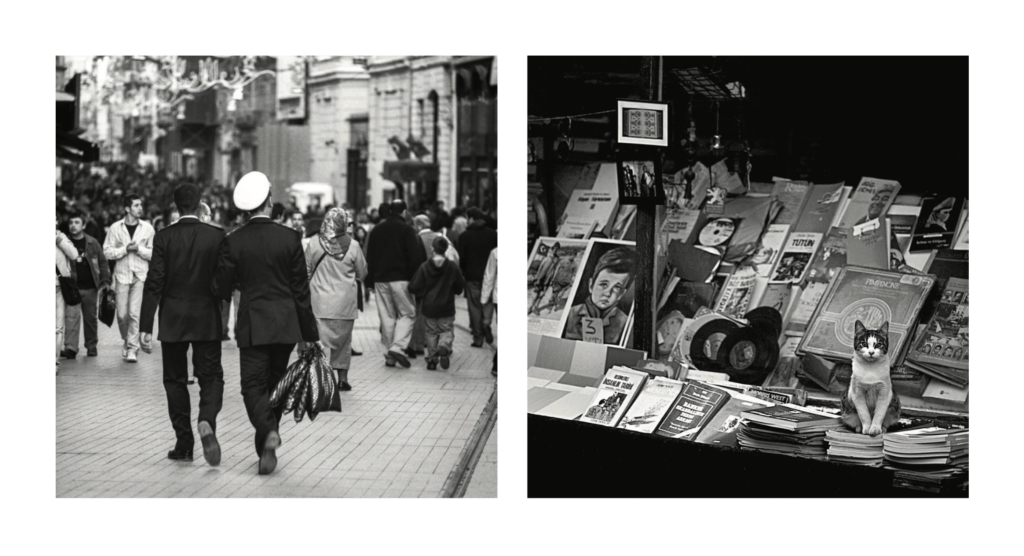
Some photographs are impossible to date. They could have been taken in the 1950s, the 1980s or the 2000s. I wanted to capture that sense of timelessness.
It took me six months to select the photographs that would go into the book from thousands of images. There are alternatives for every character and every photograph. And there are still countless images I couldn’t include.
You’ve shot with both a Hasselblad and digital cameras. Can you still taste the difference?
We have to keep up with the times, so I also run digital photography workshops. Of course, I shoot a lot digitally. But I think you can still shoot exclusively on film. It may be more demanding, but you can see the difference. Even with the best digital camera, you don’t get quite the same atmosphere. A digital image can look a little artificial and flat, like an HD television image.
You take the same photograph on film and look at it, and there’s a depth to it. It feels alive. Even when I edit my digital photographs, I process them in an analogue style. I add a little more grain.
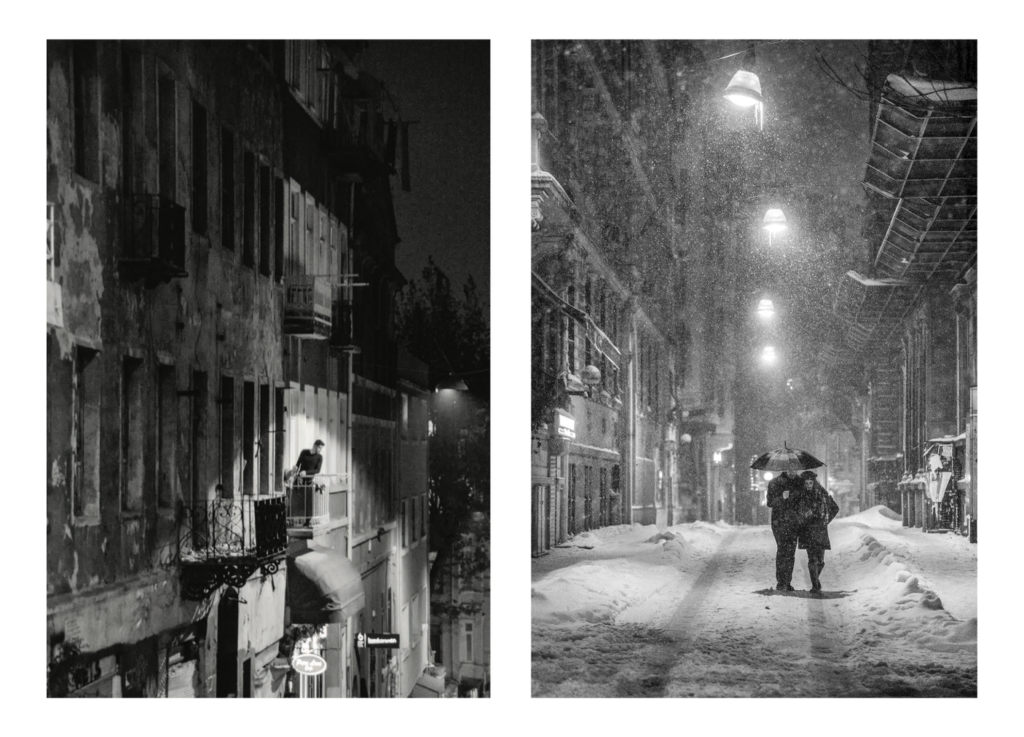
You have an artist persona who likes experimenting. I remember seeing some very different kinds of work in your “Transforming City” exhibition…
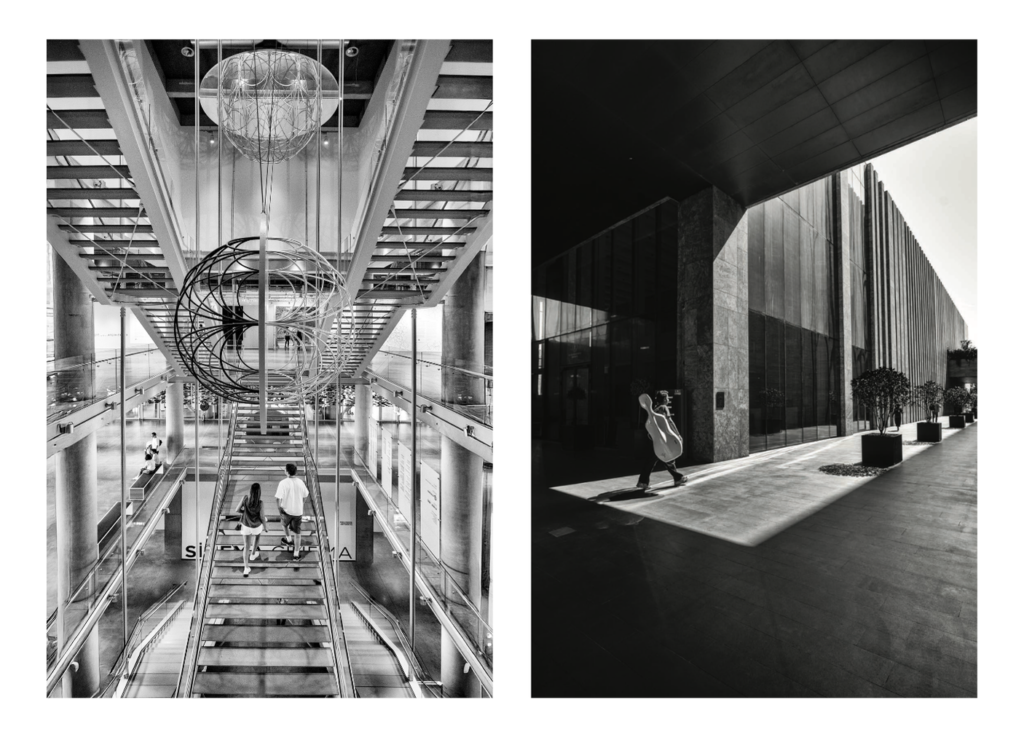
Those were entirely manipulated photographs. For that exhibition, which I opened at Barınhan last September, I used a toy Diana camera to shoot on film. I used expired film and developed it using the reversal process.
The resulting images captured Istanbul’s cultural and spatial transformation quite well. In areas undergoing urban redevelopment, for example, you’d see sheep grazing in the foreground while new high-rises rose behind them.
The installation was accompanied by poetic texts written by you, actually: “As skyscrapers reach towards the sky, memories retreat beneath the earth…”
Your “Beyoğlu Then & Now” book is a continuation of an Istanbul anthology. Each of your books seems to focus on a different side, character or feeling of the city.
Yes. Before Beyoğlu, there was “Hans of Istanbul”. That was the result of 15 years of work. While photographing the Old City, I discovered Istanbul’s historic hans (merchant inns designed around big courtyards) and the silversmiths and goldsmiths working in their workshops. I became friends with some of them and decided to develop the work as a social responsibility project. We always invited the craftsmen featured in the book to our exhibitions. I also held three workshops with my students focusing on the hans.
What’s next?
I have a very large archive. I’m still deciding, but the first thing I’d like to do is publish a smaller-format collection book. It would bring together my photographs that have entered collections and received the most appreciation. In a way, it wouldn’t be my “best of”, but the best of the people who have followed my work. Sometimes I post a photograph on social media that I consider very good and meaningful, and it gets the fewest likes. This book, in the spirit of “Selected Works”, would bring together the Istanbul photographs that people have loved the most.
And then there are the Roma communities I’ve been photographing since the 1980s in places like Sulukule, Kağıthane, Dolapdere and Edirne. They are people I feel very close to. I’d like to make a book about them too. It’s a major project. I’d have to make a very careful selection and spend months on it.
At the same time, I’ve accumulated a large archive of the Old City: the areas between Ayvansaray and Yedikule, with portraits, moments and places photographed across the entire historic peninsula surrounded by ages-old walls. I’d like to publish that as three volumes.
If I have enough time of course. Time keeps moving…
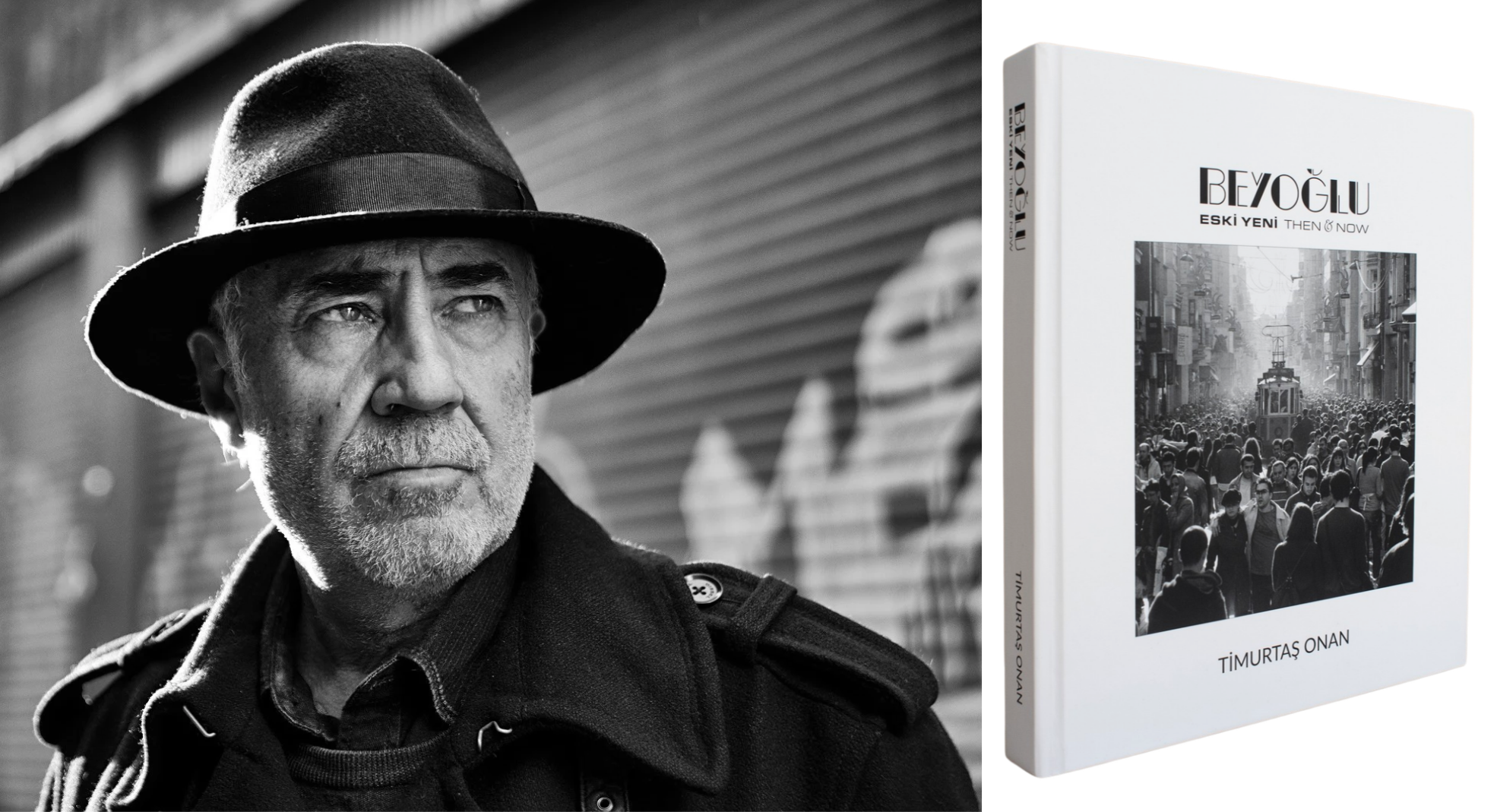
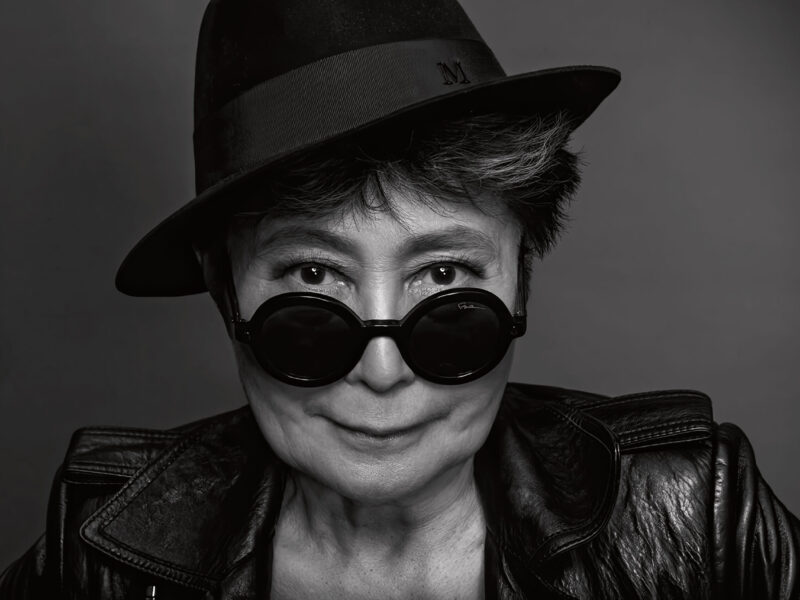
Timurtaş Onan. Portrait: Mete Laçin
You’re quite a prolific worker…
Yes, but there is neither a proper photography publisher nor much encouragement. Let’s put it in the kindest possible way: Turkey can be rather demotivating.
All my photographer friends in Europe have publishers, and their books are distributed across several countries. Here, bookstores won’t even put your book on the shelf.
Some of them don’t understand books; they look at the discount they’ll get. It has happened to me many times. I’ll walk into a bookstore on İstiklal Avenue and ask for a book by a well-known writer or poet, and the person working there won’t even have heard of them. They’ll just look it up on the computer. It wasn’t like that in Beyoğlu’s bookshops in the 1990s.
İsmail İlbey, the second-hand bookseller who has been working in Aslıhan Passage for 40 years and whose portrait appears in “Beyoğlu Old & New”, is a great example. He has read the books he has sold over the years. He once told me that discovering new writers was more exciting to him than discovering new countries.
That stayed with me.
Where might we still run into you when we’re out in Beyoğlu?
There used to be cafes and bars like Kaktüs and Cadde-i Kebir on İmam Adnan Street. There were some great spots in Asmalı Mescit too. We still go there occasionally, although that bohemian atmosphere is gone. There was a place called Kino Garden that we loved. They played great music. It has turned into a rather strange restaurant now.
Refik and Sofyalı meyhanes have closed; everywhere has become a beer hall. The community of artists and art lovers who lived and created outside the system, and who once gave Beyoğlu much of its character, has unfortunately become much smaller.
Are there still any good hidden corners?
Nevizade Street is still nice… They recently got rid of the live music, which had become an awful cacophony. Everyone who picked up a guitar would start shouting into it. There’s a scruffy little beer hall at the corner where Nevizade meets Balo Street. I like that place.
Our friend Volkan has a venue called 60 Metrekare on Sadri Alışık Street, with live music staged regularly. I often go to Yeşilçam Kahvesi, at the corner of Sadri Alışık and Ayhan Işık streets. And Bova is good for jazz. Down at the lower end of Mis Street, Bova and bars like Rock’n Rolla and Rasputin form something of a little protected zone. It feels a bit like the 1990s. Mis Street is where protesters used to gather during demonstrations. You’d hear people shouting, “Neredesin aşkım?” — “Where are you, my love?” — while the police stood lined up nearby.
I like the rooftop bar at the Büyük Londra Hotel. Its lobby was beautiful too, although these days it seems to be mostly occupied by wedding photographers. There’s Noir Pit on Meşrutiyet Avenue; I go there for coffee. Barnathan’s terrace is also lovely as you walk down Yüksek Kaldırım towards Galata.
In Cihangir, Savoy Pastry Shop is still there, even though it has changed hands. We occasionally go there for breakfast or tea.
These landmarks help you hold on to your sense of place. If Savoy is still there, perhaps we can all breathe a little easier…
Yes, exactly. The tea gardens around Firuzağa Square are still there too. That part of Cihangir still draws me in.
Timurtaş Onan’ı takip etmek için: @timurtasonan
Where to find “Beyoğlu Old & New”
– Signed copies: Shopier
– Scala Kitabevi in Hazzopulo Passage
– Robinson Crusoe in Salt Beyoğlu
– Patika Kitabevi, Teşvikiye
– İstanbul Kitapçısı, at ferry piers